

If you arrived in Japan on a working holiday visa, you probably expected some paperwork. What you may not have expected is someone sliding a small ink pad across a desk and asking you to stamp a document with a personal seal. Yet here you are, Googling “hanko for working holiday in Japan” in a break room somewhere between your first shift and your first trip to city hall.
This guide explains exactly why that happens, what documents are likely to involve a hanko during your time here, and how to get the right stamp without overcomplicating it.
Working holiday makers occupy an interesting middle space in Japan. You are not tourists, but you are not long-term residents either. That in-between status means your paperwork experience is genuinely different from both groups — lighter than a permanent resident’s, more involved than a traveler’s. The hanko question comes up earlier than most newcomers expect, often within the first two weeks of arriving and starting work.
By the end of this post you will know why employers and HR departments ask for a seal, which documents commonly require one, what type of hanko to get, and how to order one in English without stress.
Why This Segment Is Asked for a Seal

Japan’s use of personal seals predates modern bureaucracy by centuries, and the practice has not fully disappeared from daily professional life. For working holiday participants, the first encounter with hanko usually comes through an employer — not city hall.
Here is why that happens. Many Japanese companies, particularly smaller businesses, restaurants, izakayas, farm operators, ski resort employers, and guesthouses, still use paper-based employment contracts and internal HR forms. These documents often include a signature line that doubles as a hanko field, or a dedicated stamp box entirely. When a Japanese employee joins a company, they stamp that box. When a foreign working holiday employee joins, the HR team often asks them to do the same.
This is not a legal trap. It is habit, internal process, and in some cases a genuine requirement under the company’s document management rules. The stamp confirms that you, the named person, have read and agreed to what is in front of you. It serves the same function as a wet signature in many other countries.
A few micro-scenarios that come up regularly:
The izakaya onboarding. You accept a part-time evening job at a small izakaya in Osaka. On your first day, the manager hands you a three-page employment contract in Japanese and points to a small red box at the bottom of each page. You have not ordered a hanko yet. The manager awkwardly accepts a signature, but you can see they are not entirely comfortable with it. Having a basic hanko would have made that moment clean and professional.
The farm stay placement. You are working a seasonal agriculture placement in Hokkaido through a third-party coordinator. The coordinator sends you a PDF agreement and a physical copy on arrival. Both have stamp fields. The coordinator tells you a signature is fine, but the farmer family — your actual day-to-day employer — quietly prefers a stamp. It is a small thing, but it sets a cooperative tone from the start.
The hostel job. A hostel in Kyoto hires you as a part-time front desk staff member. Their internal HR checklist, used for all staff including Japanese, includes a “hanko confirmation” step. Without one, your file sits in a pending state longer than necessary.
None of these situations are emergencies, but they are common enough that arriving with a hanko already in hand is simply the more prepared option.
Common Documents and Timelines
Working holiday participants typically encounter hanko fields across a handful of document categories. Not every employer will require one for all of these, but knowing the list helps you stay ahead of requests.
Employment contract (雇用契約書). The most common first document. Often two copies — one for you, one for the employer. Each copy may have a stamp field for both parties.
Internal HR acknowledgment forms. Things like workplace rules confirmation, uniform policy agreements, or workplace safety briefings. Smaller companies often format these as one-page documents with a stamp or signature field.
Bank account opening. If you open a Japanese bank account to receive your wages — which is common and practical — some branches still ask for a hanko alongside your passport and residence card. Japan Post Bank (ゆうちょ銀行) in particular has historically included hanko in its account-opening process, though this varies by branch and has been changing in recent years. Confirm with the specific branch before you go.
Apartment or share house lease. If you stay long enough to move into a private rental, the lease agreement will almost certainly include a hanko field. Many share houses aimed at foreigners have adapted their processes, but traditional landlords and real estate agents still expect a stamp.
City hall registration and related forms. When you register your address at your local ward or city office (住民登録), the forms themselves often just need a signature, but some municipalities still provide stamp fields. Having a hanko speeds up the process and avoids explanations.
Timeline to keep in mind:
- Before or within Week 1: Ideally have your hanko before you start your first job.
- Week 1–2: Employment contract signing usually happens during this window.
- Month 1: Bank account opening, address registration, and any lease paperwork if applicable.
A practical checklist for working holiday paperwork readiness:
- Hanko ordered and in hand before first day of work
- Ink pad or self-inking stamp confirmed and tested
- Residence card obtained after arriving in Japan
- Address registered at local city hall
- Bank account opened (Japan Post Bank or major city bank)
- Employment contract signed and stamped
- Copy of employment contract kept in your own records
Recommended Hanko Type and Size

Working holiday participants do not need the most formal or expensive hanko. What you need is practical, readable, and sized correctly for standard Japanese document stamp boxes.
Type: Mitome-in (認め印) This is the everyday personal seal. It is not registered with any government office (unlike a jitsuin, which requires official registration). For employment contracts, internal HR forms, and most working holiday-related paperwork, a mitome-in is entirely appropriate. You do not need to register it. You do not need to pay registration fees. You simply use it.
Size: 10.5mm or 12mm diameter Standard document stamp boxes in Japan are sized around these dimensions. A 10.5mm hanko is the most common everyday size. A 12mm stamp is slightly more substantial and works well if you want something that looks a little more formal for lease agreements or bank forms. Avoid going larger unless specifically asked — oversized stamps are harder to fit cleanly in small fields.
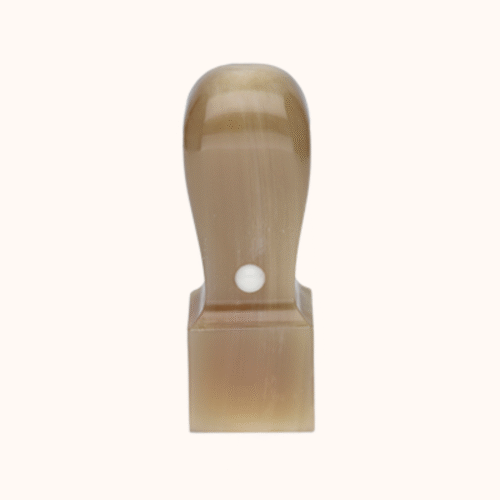
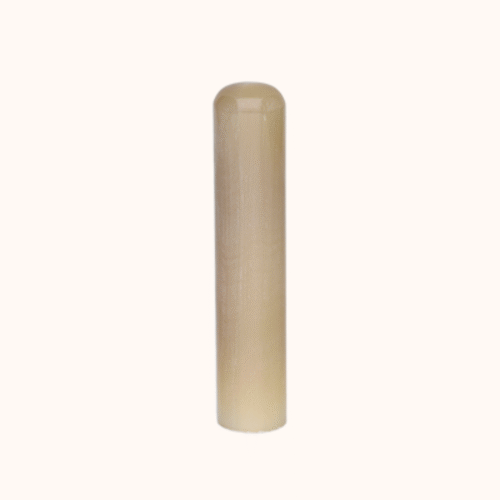
Material: Resin or eco-wood For a working holiday stay, durable mid-range materials like resin (アクリル) or eco-wood composites are perfectly suitable. You do not need ivory, buffalo horn, or high-end rosewood. These materials are more appropriate for long-term residents or business hanko. A clean, readable resin hanko in the right size does the job well.
Name: How to handle it This is where many foreigners hesitate. Japanese hanko traditionally carry Japanese characters. For working holiday participants, there are two sensible approaches:
- Katakana rendering of your name. The most common and professionally accepted approach. Your name is transliterated into katakana — the Japanese phonetic script used for foreign words and names. For example, “Alex” becomes アレックス, “Maria” becomes マリア. This is what most employers and institutions expect.
- Romaji (Roman letters). Some foreigners prefer a stamp with their name in English script. This is increasingly accepted, particularly in more international workplaces and among younger HR staff. However, in more traditional settings — farming employers, older-style guesthouses, traditional landlords — katakana is the safer choice.
If you are unsure, katakana is the default recommendation.
Common mistakes to avoid:
- Ordering a stamp that is too large (over 15mm) for standard document fields.
- Choosing a font so decorative that your name becomes unreadable. Readability matters more than style for practical documents.
- Waiting until your employer asks for a hanko to order one — lead times and customs processing mean last-minute orders can leave you in an awkward position.
- Assuming a signature will always be accepted as a substitute. Some HR departments do not have flexibility on this, particularly at more traditional Japanese companies.
Ordering Tips in English
The good news is that ordering a hanko in English is genuinely straightforward now. You do not need to walk into a Japanese stationery shop, point at things, and hope for the best — though that approach has worked for many people.
If you’re still looking for the right role, ComfysCareer is a solid starting point for foreigner-friendly jobs in Japan.
Once you have your job sorted, getting your hanko should be one of the first practical steps you take. HankoHub offers an English-language ordering process designed specifically for foreigners — you can specify your name, choose katakana or romaji, select size and material, and receive a stamp that is ready for professional use. The site walks you through each decision, which removes the guesswork that usually trips people up.
A few practical tips for the ordering process:
Confirm the katakana rendering before finalising. A reputable service will show you exactly how your name will appear on the stamp before it is made. Double-check the characters match what you intend. If you have an unusual name, ask for confirmation.
Check shipping and processing time. If you are ordering from outside Japan or immediately after arriving, factor in delivery time. Most standard orders through established services take a few business days within Japan. International shipping before you arrive is also an option if you plan carefully.
Self-inking versus traditional. A self-inking hanko (which contains its own ink reservoir) is more convenient for everyday use — no separate ink pad needed. A traditional stamp with a separate red or black ink pad is more formal in appearance. For working holiday purposes, self-inking is the more practical choice.
Keep your hanko safe. In Japan, your seal is treated with a level of seriousness similar to a signature. Do not lend it to others or leave it in accessible places. This is especially true if you ever register a hanko officially (which working holiday participants generally do not need to do, but worth knowing).
FAQ
Do I legally need a hanko as a working holiday visa holder? Not always, and this varies by situation. For most employment contracts and internal HR forms, a signature is technically sufficient under Japanese law. However, individual employers, landlords, and financial institutions set their own internal requirements. In practice, having a hanko available removes friction and demonstrates you understand how things work here — which matters in Japanese professional settings.
Can I use a cheap stamp from a 100-yen shop? Technically yes, but it is not recommended. Generic pre-made stamps at convenience stores and discount shops carry common Japanese surnames and are not personalised. As a foreigner with a non-Japanese name, you will not find your name on those racks. A personalised hanko with your actual name is the appropriate and professional choice.
What if my employer says a signature is fine? Then a signature is fine. Use it. But keep in mind that other parties involved in your life during a working holiday — landlords, banks, city offices — may not share that flexibility. Having a hanko covers you across all scenarios.
Do I need to register my hanko with the city? For everyday working holiday use, no. An unregistered mitome-in is all you need. Registered seals (jitsuin) are required for high-stakes legal transactions like buying property or registering a vehicle, which are outside the typical scope of a working holiday stay.
Can I bring my hanko home as a souvenir after my working holiday ends? Absolutely. Many working holiday participants keep their hanko as a functional memento of their time in Japan. It is small, personal, and genuinely useful if they ever return.
Next Steps

If you are preparing for a working holiday in Japan, getting a hanko sorted before your first day of work is one of those small preparations that pays off quickly. It removes awkward moments, speeds up paperwork, and signals to Japanese employers and institutions that you came prepared.
Order a practical personal hanko at HankoHub — the process is fully in English, you can customise your name in katakana or romaji, and your stamp will arrive ready for whatever Japan’s paperwork asks of you next.